Ginger Zingiber officinale
Fresh and ground are two different spices. Fresh is hot and bright, ground is warm and sweet, and neither stands in for the other.
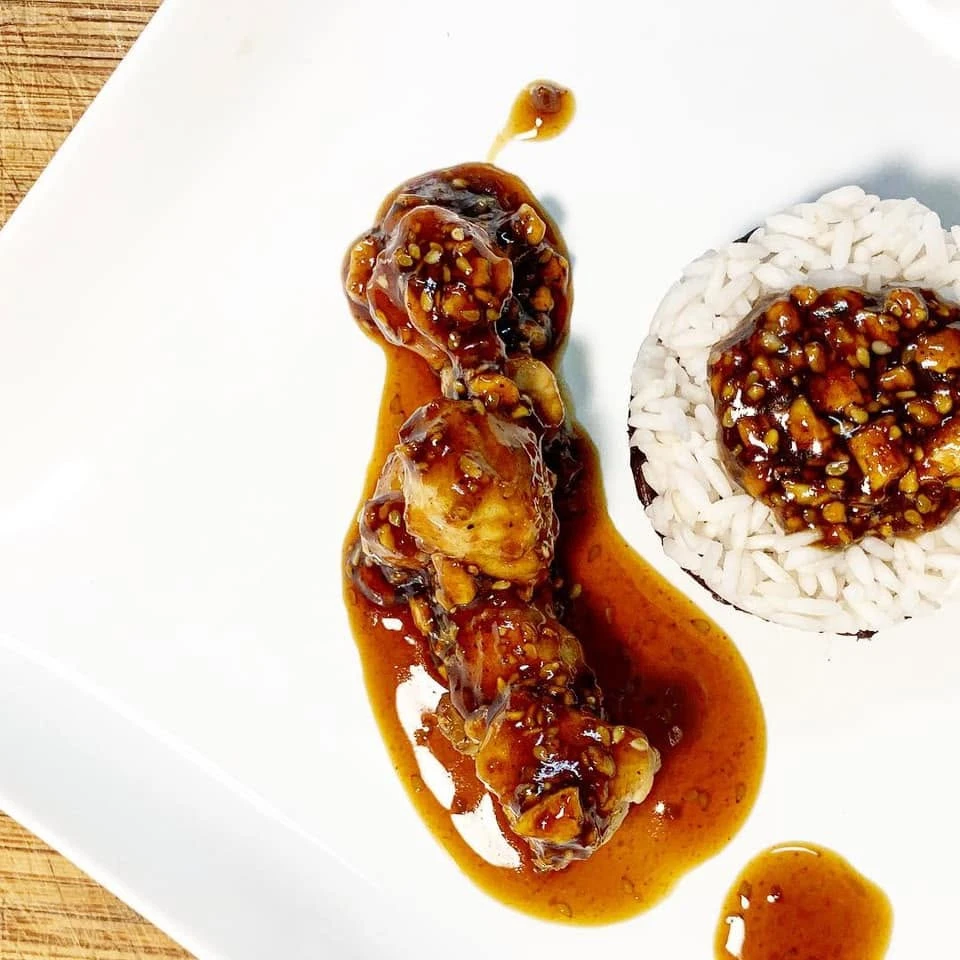
1 recipe on this site
Ingredient reference image: AI-generated. Recipe photography is my own.
In the kitchen
Peel it with a spoon
The skin is thin and the rhizome is knobbly, so a peeler or knife takes a third of it away with the skin. The edge of a teaspoon scrapes the skin off and follows every bump.
Grate across the fibre
Mature ginger is stringy in one direction. Grating along the fibres gives you threads that sit in the dish; grating across them breaks the fibre and gives you pulp and juice.
Fresh goes in twice
Some at the start with the aromatics for the deep warmth, some at the very end for the bright hot edge, which is volatile and cooks off. Restaurants in most Chinese and Indian traditions do this as a matter of course.
Beyond the kitchen
GINGER BEER PLANT
Traditional ginger beer is fermented with a symbiotic culture of yeast and Lactobacillus known as the ginger beer plant, passed hand to hand like a sourdough starter. Commercial ginger beer today is almost entirely carbonated and unfermented.
CURRENCY AND TRADE WEIGHT
Ginger was priced by weight against livestock in parts of medieval Europe, and it is one of the few Asian spices that reached England early enough to be widely known there before the sixteenth century.
GINGERBREAD AS CRAFT
Decorated gingerbread has been a guild-regulated craft in parts of central Europe for centuries, with carved wooden moulds and, in cities such as Toruń and Pardubice, protected local traditions that survive as a formal designation today.
THE GARDEN PLANT
A supermarket rhizome with visible growth buds will sprout in a pot of compost and makes a decent, if slow, houseplant — tall reed-like leaves and, occasionally, a flower. Ornamental gingers are grown widely for the flower alone.
A longer history
Ginger has been cultivated so long that no wild population survives anywhere, which tells you it was domesticated in prehistory, most likely in Island Southeast Asia. Austronesian voyagers carried it across the Indian and Pacific Oceans, and it reached China and India early enough that both have textual records of it going back well over two thousand years.
It travelled west before most Asian spices did. It is described by Greek and Roman writers, was traded through the Red Sea into the Roman Empire, and was familiar in Anglo-Saxon England, which makes it one of the earliest tropical spices to become genuinely ordinary in northern Europe. Medieval English and German cooking used it at a volume closer to modern Indian cooking than to anything European today.
The Portuguese carried it to West Africa and the Spanish to the Caribbean in the sixteenth century, where it took immediately. Jamaica became a major exporter within decades and remains associated with a particularly pungent grade. Today India is by far the largest producer, and ginger is one of the very few spices whose fresh and dried forms occupy genuinely separate culinary categories worldwide.