Nutmeg Myristica fragrans
Grate it as you need it. A whole nutmeg keeps for years; the ground version is stale inside a few months.
1 recipe on this site
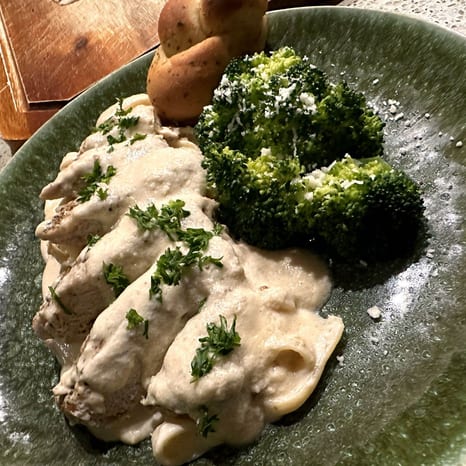
Ingredient reference image: AI-generated. Recipe photography is my own.
In the kitchen
It goes in at the end
Nutmeg's aromatics are volatile and long cooking flattens them. Grate it into a béchamel off the heat, over the spinach as it leaves the pan, into the custard once it has thickened.
A dozen strokes, not a spoonful
Fresh nutmeg is far stronger than the ground jar most cooks calibrated on. Six to twelve passes of the grater seasons a whole sauce; a teaspoon makes it taste like a candle.
It belongs in savoury food
Most English-speaking cooks file nutmeg under baking, which is a narrow use of it. It is standard in béchamel, spinach, potato gratin, sausage, meatballs and pasta fillings across Italy, France and the Low Countries.
Beyond the kitchen
TWO SPICES, ONE FRUIT
Nutmeg is the only major spice that yields two distinct commercial products from a single fruit. The crimson aril is peeled off by hand, flattened and dried into mace, which historically fetched several times the price of the nut inside it.
THE BANDA ISLANDS
For centuries nutmeg grew only on a handful of tiny islands in the Banda Sea. The Dutch East India Company's seizure of them in 1621 involved the near-destruction of the Bandanese population — among the most brutal episodes in the history of the spice trade.
RUN FOR MANHATTAN
England held the nutmeg island of Run, and under the 1667 Treaty of Breda traded its claim to the Dutch in exchange for the Dutch claim to Manhattan. Both parties considered the nutmeg island the more valuable asset at the time.
GRENADA'S FLAG
Grenada is the world's second-largest producer and puts a split nutmeg on its national flag. Cultivation arrived in the Caribbean in the nineteenth century after the Dutch monopoly was broken.
A longer history
Myristica fragrans is native to the Banda Islands in the Maluku archipelago, and for most of recorded history those few square miles were the only place on earth it grew. It reached Europe via Arab and Venetian traders from at least the early medieval period at prices that made it a marker of wealth.
Its history is inseparable from violence. Portuguese, Dutch and English competition for the Bandas culminated in the Dutch East India Company's conquest in 1621 under Jan Pieterszoon Coen, which destroyed Bandanese society and replaced it with an enslaved plantation system. The 1667 exchange of Run for Manhattan is the episode people remember, and it makes sense only if you understand what nutmeg was worth.
The monopoly ended when seedlings were taken to Mauritius, and later to Grenada and Zanzibar, in the late eighteenth and nineteenth centuries. Indonesia and Grenada dominate production today. In Europe the spice settled into a quiet and largely savoury role — béchamel, gratins, sausage — which is a strange afterlife for something people once fought wars over.
USE IT IN KITCHEN QUANTITIES
Nutmeg contains myristicin, and consuming it in very large amounts — whole nuts rather than gratings — is genuinely dangerous and lands people in emergency rooms every year. There is nothing to worry about in any culinary use: a whole recipe's worth is a fraction of a nut. It is worth stating plainly only because the idea of eating nutmeg in quantity circulates online periodically. Do not.